Wednesday, July 27, 2016

Growing Up A Child Of The Sixties


I was born in Philadelphia, PA in 1951. I went to a public school that was racially integrated and had a few friends who were Black. Because my maternal Grandmother who lived with us was a bigot (she hated Blacks, Italians, Poles, Chinese, Japanese, Jews, French, Germans - basically she hated anyone who was not a Protestant who could not trace their ancestry to England, Scotland or Wales), they couldn’t come to my house so I would go to theirs. Aside from her, I never saw much racial discrimination or bigotry until my mother and I went to Washington, D.C. in 1961 when I was touring in a play.
There I saw legalized racial discrimination for the first time - separate restrooms, separate water fountains, etc.
At the theater I was performing at, the Whites were on the ground floor and Blacks could only use the balcony. When we took the bus from the hotel to the theater, we sat in front, the Blacks sat in back and if all the seats were occupied and a White person got on the bus, one of the Black people was required by law to give them their seat.
Because I was making good money as a child performer in Broadway musicals and on local TV, my father was able to achieve his life-long dream of going to college and seminary and becoming an American Baptist Convention minister. While in seminary, he became friends with several of his classmates - including a young man named Martin Luther King and another young man named James Reeb.
My father also was the Scoutmaster of the Boy Scout Troop that my brother and I were members. One summer, our troop went to Treasure Island Scout Camp and my brother and I got to know a kid from New York, another Boy Scout named Mickey Schwerner.
On August 28, 1963, my family and I were on the Mall in Washington, D. C. listening to Martin’s “I have A Dream Speech”
In 1964, Mickey Schwerner and two other Civil Rights workers were killed by the Ku Klux Klan and their bodies buried in an earthen dam in Philadelphia, Mississippi.
Martin spoke with my Dad - and Dad, Mom, my brother and I went to Selma and marched for Civil Rights. On Bloody Sunday, March 7, 1965, all four of us were arrested
On March 11, 1965, Dad’s friend, James Reeb, who had become a Unitarian minister, was beaten to death by the Ku Klux Klan in Selma, Alabama.
On April 4, 1968, Martin was assassinated. Dad was one of the many clergy who spoke at his funeral.
Are things worse now?
Are things more violent now?
To be completely honest - I do not know.
Different - yes.
Better?
Worse?
I do not know.

Sunday, June 19, 2016

A Bad Day In East Berlin

Note: So many people have asked for a more detailed story about this incident that I guess I better get around to writing about it. Be advised that most of the names are pen-names or pseudonyms – some of the people are, or may be, still alive at the time I am posting this

August 1973:

As I have written in “Just Another Day At The Office...”, during the course of an investigation, we had convinced an East German agent who had been spying on the U. S. Air Force in his capacity as Head Bartender at the Wisbaden Air Base to become a “double agent” – to work for the West while still pretending to spy on us. “Heinrich” and I spent a lot of time together in the interrogation room and developed something of a rapport, if not a friendship. After his decision to affectively switch sides in the Cold War, he was handled by people within the American CIA and the West German Bundeskriminalamt (BKA).

Eventually Heinrich was recalled to East Berlin and was promoted within the Stasi (the Ministerium für Staatssicherheit or Ministry For State Security). He continued to send out information to his CIA & BKA handlers.

Intercepted communications within the East German intelligence agencies indicated that people within the Stasi were beginning to distrust Heinrich and were compiling evidence to arrest him for spying for the West. A decision was made to get him out before he was arrested. Heinrich, being naturally and logically paranoid, did not trust just everybody and would only “come out” if personally contacted by someone he knew wasn’t Stasi. I stupidly volunteered to be that person.

Armed with a very authentic-looking Austrian passport identifying me as a businessman from Salzberg, Austria who worked for a toy company (which fit my Southern German accent), I crossed the border between Austria and Yugoslavia and traveled through the various Warsaw Pact countries on a “business trip” until I got to East Berlin. I made contact with Heinrich and we started to a “safe house” that I had been briefed on where he would be smuggled out of the city and into West Berlin. (The original plan had me finishing my business trip and returning through Yugoslavia and Austria.)
Heinrich realized that we were being followed so we decided to split up a few city blocks before our destination. For whatever reason, the man following us decided to stick with me. I looked for a place to shake him, but made a mistake and entered a dead end street.

He called on me to stop and I did, turning to face him. He was pointing his gun at me (a Makarov pistol) so I put my hands up. I figured the worst possible situation would be that he would take me in, I would be interrogated and then held to be exchanged for some East German agent who had been captured by the West – which was normal practice in those Cold War days of the early 1970’s.
Some psychic sense, however, told me that he was not going to arrest me - he was going to shoot me. I did my best impersonation of a creature than has no internal skeleton and collapsed. His bullet, which was intended for my left chest, gouged across the top of my left shoulder. It felt like an incredibly strong man had hit me in the shoulder with all their strength. On the way to the ground, I got my own gun out and shot him twice.

We both laid there for a moment. I got up, went over to him and found that he was dead. I quickly searched his pockets and took his wallet and his Makarov. I somehow got the few city blocks to the safe house and passed out shortly after entering. The people there gave me emergency medical treatment and smuggled me into West Berlin the next day (I remember nothing about it. I remember collapsing in the hallway of the safe house and my next memory was waking up in a hospital in West Berlin).

Heinrich was given a completely new identity and eventually ended up in Waco, Texas where he taught German at Baylor University. We met once, years later, and had more than a few beers in celebration.

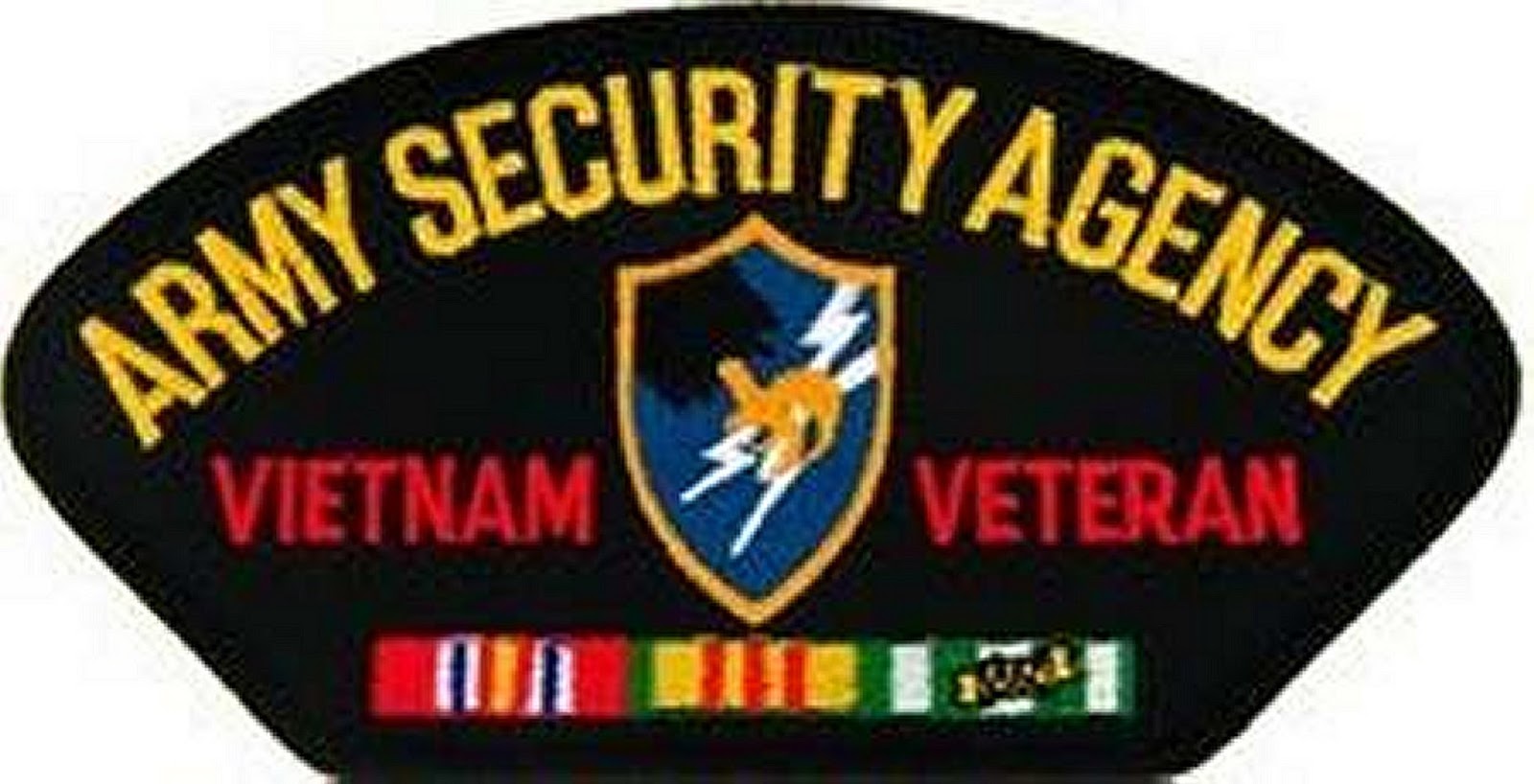
In my 27 years in Army Intelligence/Counter-intelligence I only had one or two scary experiences like this - most of the time it was pretty dull, hum-drum work. I wish it had all been dull, hum-drum work.

Thursday, June 9, 2016

"We few, we happy few…"


My Friend, Anna

New York City, 1961-

I was 9 years old and was in New York City with my mother as my chaperone in rehearsal for “Sail Away” where I played one of the annoying kids on the cruise ship Carolonia who were giving ship’s activities director, Mimi Paragon (Elaine Stritch) a hard time in “The Little One’s ABC’s”. I had a night off and we managed to get tickets for “The Miracle Worker” with Patty Duke and Anne Bancroft which was at the Playhouse Theater.  I remember sitting there, mesmerized watching Patty on stage. We met briefly after the performance at the stage door, a 9 year old actor and a 13 year old actress.
1990 –
My cousin, Russell “Rusty” Hamer, former child star of “Make Room For Daddy” committed suicide and Paul Petersen, himself a child TV star from “The Donna Reed Show”, started A Minor Consideration to try and reach out and help former child performers who were having issues dealing with adulthood.  I connected with the group and through it re-connected with Anna (Patty’s real name). She told me about seeing me in “Sail Away” after we opened and about seeing me in “Oliver!” in 1963, having a crush on Davy Jones, who was playing The Artful Dodger (Davy, as almost everyone knows, went on to be one of TV’s The Monkees).  I was finishing up my 27 year Army career and she had married Michael Pearce who had been an Army sergeant when they met. We kept in touch with letters and e-mails and would occasionally cross paths. She was always very kind, nice, and had quite a sense of humor.
When my fiancee died in an accident in January of 2015, Anna was one of the first to reach out to me and help me get through that emotionally devastating time.
The last time I heard from her directly was in February 2016 and, even though she was not well, almost everything in her e-mail was “how are you doing?” and concern about me.
That’s the Anna I will always remember, giving freely of herself and asking little in return.
Anna "Patty Duke" Pearce, my friend 1946-2016. R.I.P.

Americhristianity is NOT Christianity

A response to the question: "Can you have left wing ideas but still have Christian views and beliefs?"

The fact that I am a follower of the teachings of Jesus and have been for over 50 years is WHY I have "left wing ideas".
The fact that I am a Christian is WHY I have worked for, and continue to work for, civil rights and human rights for every person, male or female, White or Black or Hispanic or Asian or Native American - even those who were not lucky enough to be born in one of the 50 United States.
I was raised in what is known as the "Social Gospel" - the Christian faith practiced as a call not just to personal conversion but to social reform. We Christians do our best to apply Jesus' teachings from the Four Gospels to social problems such as poverty, slums, poor nutrition and education, alcoholism, crime, and war.
We Christians do not follow the religion of Americhristianity that many follow but claim it to be Christianity - as a friend, Christian minister John Pavlovitz,  describes it,
Americhristianity is a Frankensteined faith made of rabid nationalism, political posturing, and fearful self-preservation. Our Jesus; (the one from the Gospels that we Christians follow) really doesn’t fit into Americhristianity. He’s too soft, too tolerant, too vulnerable. He’s not brash enough, his foreign policy not tough enough. Americhristianity retains only the smallest sliver of Christ; conveniently just enough to get people saved or send them to Hell. 

Outside of that, Americhristianity is purely Stars and Stripes and American Dreams, all wrapped around a cross. 

Americhristians are perfectly content to demand revenge when they get hurt, perfectly content to live fat and happy surrounded by poverty, and perfectly content to pick fights whenever they are confronted - confident that Jesus approves of all of it. Americhristians are not sinister in this, just oblivious. 

They have been led to believe that Americhristianity is the real Christianity - and that the Christianity of those of us who try to follow Jesus' teachings is heresy, un-Godly, apostate, liberalism and vaguely  Socialism- maybe even Communism.

God loves drunks and fools

Originally published January 23, 2016 in response to a Question - 


"What's the best thing you've done while drunk?"


September 1970 Fire Support Base Fuller, Dong Ha Mountain, Quang Tri Province, South Vietnam -
I was one of 12 American soldiers on a fire base on top of a mountain in South Vietnam. With us were approximately 600 South Vietnamese soldiers. One of their officers, a Captain Nguyen, had gotten an undergraduate degree at Stanford in California and spoke almost perfect American English. We got to be pretty friendly.
For almost 3 weeks I had received no mail or any word from my parents or my fiancee. During a time when I was off-shift and really depressed, I opened a brand new bottle of Jack Daniels whiskey and proceeded to drink. About the time I had drunk approximately 2/3 of the bottle, the North Vietnamese started hitting us with mortars and rockets. The last thing I consciously remember was seeing Captain Nguyen get hit.
(Everything afterwards, in italics, was described to me later, after I sobered up).
I put down the bottle of Jack Daniels, walked across the compound to Captain Nguyen, picked him up, walked back across the compound to our bunker, administered first aid and called a Medivac helicopter. When the helicopter arrives, I picked up Captain Nguyen, carried him out to the helicopter, put him on the helicopter and then stood there, waving "good-bye" as it took off. The I went back to the bunker to finish the bottle. During this whole time, mortar and rocket rounds were landing all around me but for some unknown reason, I didn't get a scratch.
Without my knowledge, the other Americans and the other South Vietnamese officers sent detailed reports of what I did to their respective higher headquarters.
When I returned to our main base in Quang Tri several weeks later, there was a reception party of South Vietnamese officers waiting for me and I was presented with the South Vietnamese Cross of Gallantry Medal.
Several weeks after that I was presented with my first Bronze Star Medal.
Captain Nguyen survived his wounds but was killed several months later in a firefight between his men and a North Vietnamese Army unit.
By the way, it turned out that the reason I had not gotten any mail for the 3 weeks was that all the letters had accidentally been sent to the wrong unit. When everything got straightened out, I got about 20 letters all at one time.
I have often maintained that, if I had been sober and less depressed, I probably wouldn't have done what I did.

The Schnozzola - Jimmy Durante

The years was 1967.

I was opening at Palumbo’s nightclub in my hometown of Philadelphia, PA for a comedian named Jack E. Leonard. Being much too young to be working legally in nightclubs (I was 15 years old), I was working with fake ID under the stage name “Dick Hamer”. Two shows a night – at 8:00 PM I would come out , do approximately 20 minutes of songs, introduce Jack E. and then go sit at a table in the kitchen and do my high school home work. I went on again at 10:00 PM, did my 20 minutes, introduced Jack E. and then left by the backdoor and took the subway home. Dad was going to school at night to finally get his college degree and my brother was in college as well, so my paychecks were an important piece of the family budget. It didn’t matter much to me – for I loved performing and dreamed of the day when I would move up from opening act to headliner.
It was an Saturday night, the last night of the engagement, when I noticed at the back of the room during the second show a face that I had seen often on TV. It was probably the most famous nose of the day – Jimmy Durante.
I don’t know if it was his presence or what, but I gave one of my best shows that night. Since I didn’t have school the next day, I stayed through Jack E’s show and when it was over, with the blind courage of youth, I walked up to Jimmy and introduced myself. He shook my hand and, before releasing it, he asked, “What are you doing next week?” I told him I didn’t have anything planned and he said, “Well, I’m opening here Monday night for the week. Are you available?” I was speechless – and when he told me how much I would get paid (almost twice what I had been getting), I could barely stammer out, “Yes”.
My last class on Monday ended at 2:30 and I raced home, changed into my working clothes (I was probably the only kid in my neighborhood to own his own tuxedo), grabbed my music and headed to Palumbo’s for rehearsal. Jimmy put a special bit for me in his act, so in addition to my 20 minutes, I would stay on stage after I introduced him and we would do a duet on Cole Porter’s “Friendship”. He would then give me a big hug and I would head to the kitchen to do my homework. At the late show, after our song, he would give me that big hug and whisper in my ear, “Go home, it’s late and you’ve got school tomorrow”.
The week ended, with great audiences every night. After the last show, Jimmy told me, “How would you like to work with me the next time I’m in town, Dick?” Of course, I said “Yes”. And for the next two years, whenever Jimmy worked at any of the clubs in Philadelphia, or at the Latin Casino across the river in New Jersey or at Steel Pier in Atlantic City, I opened for him. The paychecks got bigger and I went from 20 minutes to 30 minutes. Between shows we would sit and talk. He would critique my act, giving praise where he thought I deserved it and constructive criticism as well. And every night, after we sang our duet, there would be that big hug and some whispered encouragement in my ear. And even though I had abandoned the stage name of “Dick Hamer” and was using my real name, Jimmy always called me “Dick”. I really hated that nickname but Jimmy was special and I never corrected him.
In the spring of 1969, knowing that I might get drafted any day, I decided to get some choice in what Army job I would do, so I enlisted. I was to report on April 4 for basic training. On April 2, Jimmy called me on the phone to see if I would be available to open for him at The Frontier Casino in Las Vegas in May and, for the first time, I had to say “No” to Jimmy. He understood and asked how long I had enlisted for. I told him 4 years and he said, “Well, Dick, how’s about opening for me then? We’ll make a date for summer of 1973 – Vegas.” Naturally I said, “Yes”.
That Christmas while at the Defense Language Institute in Monterrey, CA I got a beautiful card from Jimmy and his wife Margie and another in 1970 while I was in Vietnam. I finished my tour in Vietnam in May of 1971, got married and left for Germany and there were cards on my birthday and at Christmas. Christmas of 1971 there was another card and tucked inside, as in the previous Christmas cards, was a note “Don’t forget – you and me in Vegas in ’73. Love, Jimmy”.
Jimmy had a stroke that next year, 1972, which confined him to a wheelchair and we never did get that chance to play Vegas together. We kept in touch with letters and cards and I re-enlisted in the Army, eventually serving for 27 years. Jimmy passed away on January 29, 1980. I sometimes wonder how different my life might have turned out to be if he hadn’t had that stroke, I hadn’t stayed in the Army and we had played Las Vegas together that year.
He was a one-of-a-kind man and we will never see his like again. I found this YouTube clip from a TV special he did in 1972 – it’s probably one of the last things he did before his stroke.

Be awful nice to 'em goin' up, because you're gonna meet 'em all comin' down.
- James Francis Durante 1893 -1980
Good night, Jimmy old friend - and good night, Mrs. Calabash, where ever you are...